

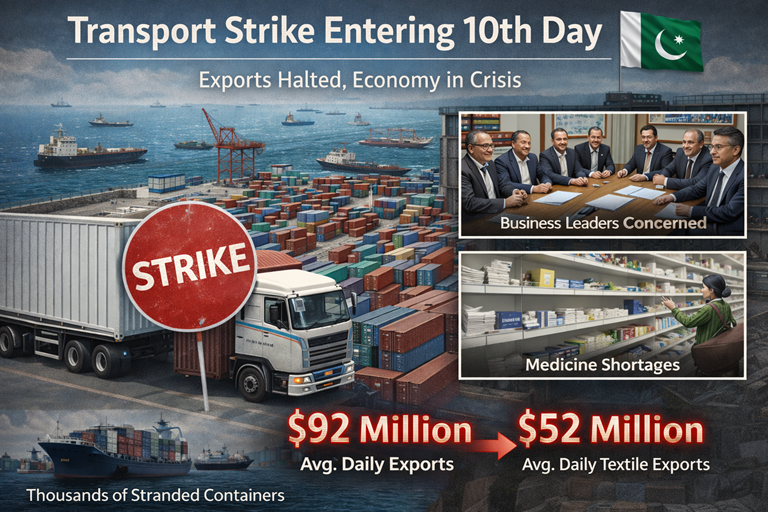
Pakistan’s nationwide goods transport strike has entered its 10th day, with industrialists warning that each passing day is costing the economy billions of rupees in lost trade and exports.
Transporters confirmed that negotiations are ongoing with federal and Punjab government representatives, including officials from the ministries of ports and shipping, communications, the National Highway Authority (NHA), motorway police, and senior FBR and Customs authorities. According to transporters, both governments have acknowledged that their demands carry merit, though talks were still underway at the time of reporting.
Despite negotiations, the Transporters’ Goods Association (TGA) has maintained that the strike will continue until key demands are addressed. These include designated parking areas for goods carriers near Karachi Port Trust (KPT), licensing issues, and regulations governing older vehicles.
Exports at a Standstill
Business leaders have strongly criticized the prolonged shutdown. PHMEA Patron-in-Chief Muhammad Jawed Bilwani described the situation as “economic sabotage,” warning that halted port operations have disrupted the national supply chain and pushed exports and imports close to a standstill.
Thousands of containers remain stranded at ports, while several vessels loaded with export cargo are reportedly waiting offshore. With Pakistan’s average daily exports standing at $92 million, and the textile sector alone contributing $52 million per day, industry leaders fear irreparable damage if the strike continues.
The FPCCI and Korangi Association of Trade and Industry (KATI) echoed similar concerns, noting that exporters are unable to meet delivery deadlines while businesses already burdened by high energy costs and interest rates face added pressure.
Medicine Shortages Raise Alarm
Beyond trade disruptions, the strike has begun to affect the supply of essential medicines across the country. Pharmaceutical industry representatives report shortages in several regions as medicines produced in Karachi and Lahore fail to reach markets.
According to the Pakistan Pharmaceutical Manufacturers Association, stocks of medicines used for diabetes, heart disease, hypertension, and mental health conditions are running low — just as demand rises due to a flu outbreak. Production has also slowed, with warehouses full and raw materials unable to reach factories.
The situation is most severe in Balochistan, where around 80 percent of medicines are supplied from Karachi. Shortages have already been reported in Quetta and other towns, raising serious concerns for patients dependent on regular medication.
Calls for Immediate Intervention
Business leaders have urged the prime minister to step in and resolve the deadlock swiftly, warning that prolonged inaction could deepen economic damage and trigger a public health crisis.
As negotiations continue, industries across the country remain on edge, hoping for a swift end to a strike that has already brought trade, exports, and essential supplies to a near halt.